If your shoulders burn by mid-morning or your lower back aches after a commute, your backpack, or how you pack and wear it, is usually the culprit. The good news: most backpack pain is preventable with a few specific changes.
The number to remember: Health and ergonomic guidance suggests keeping a loaded everyday pack under about 10-15% of your body weight. For a 70kg person, that's roughly 7-10kg. Past that, the strain adds up.
Why backpack pain happens
Three forces combine: too much weight, poor fit, and bad habits (one strap, bag sagging low). Carrying more than your body comfortably handles increases lumbar disc compression and pushes your head and shoulders forward: the posture changes researchers link to chronic strain. Fix the weight, the fit and the habits, and the pain usually fades.
Features that protect your body
- Wide, contoured, padded straps (around 10mm+ of foam) spread load across the shoulders instead of digging in.
- A breathable, channeled back panel supports your spine and keeps you cooler.
- A sternum (chest) strap pulls the straps inward, stabilizes the load and offloads your shoulders.
- A hip belt (on larger packs) transfers weight to your hips, your body's strongest carrying point.
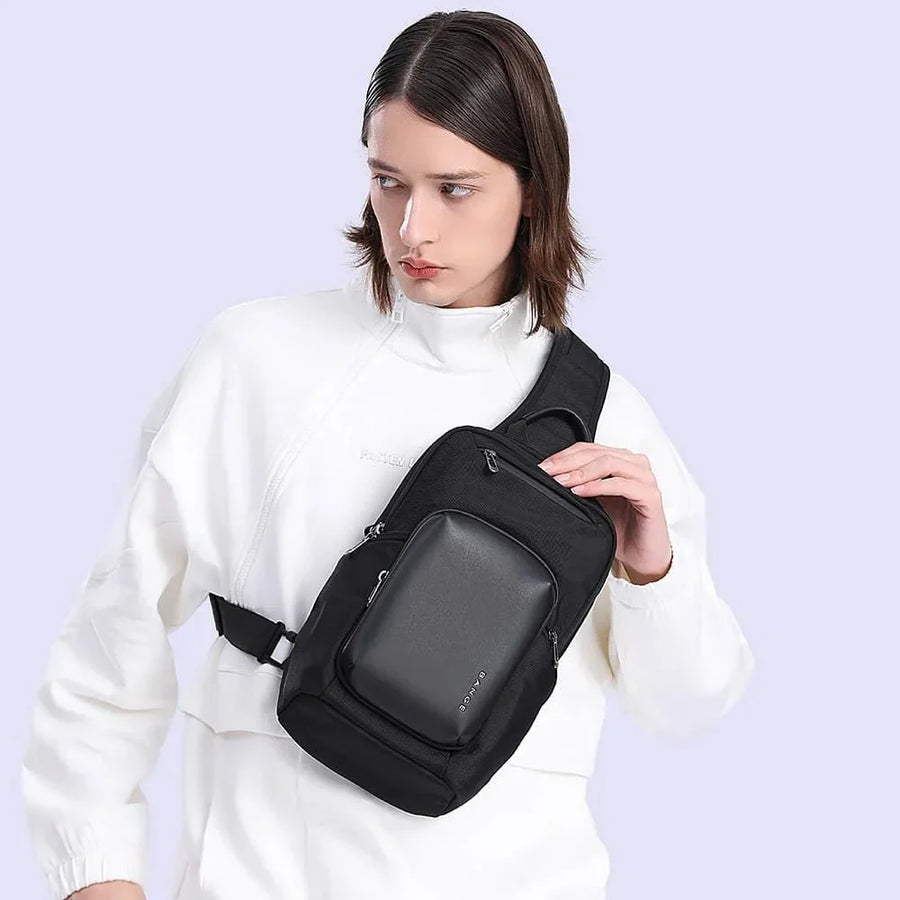
A genuinely lightweight shell also helps, since every gram of the bag itself adds to what your shoulders carry. The Bange Aerox 2517 keeps its own weight low while still packing padded straps and a supportive back panel.

Pack for balance
Weight placement matters as much as weight amount. Put the heaviest items closest to your back and centered, with lighter, softer things toward the outside and bottom. A bag that sags or bulges away from your spine pulls on your neck and shoulders.
Wear it right
Use both straps, always. Adjust them so the bag sits high on your back, with the bottom around your waistline, not sagging by your hips. Snug it close to your body so the weight hugs you rather than swinging behind you.

One honest caveat
The 10-15% guideline is a starting point, not a law: fitness, age and experience all shift what's comfortable, and some people need to stay well below it. Let pain and posture, not just a percentage, guide you. A pack engineered for airflow and support, like the Bange Strava 7267, makes a given load noticeably easier to carry.
Backpacks and school-age kids: National School Backpack Awareness Day
Every September, the American Occupational Therapy Association (AOTA) marks National School Backpack Awareness Day (the third Wednesday of the month, September 16 in 2026) to remind parents that everything above applies just as much to kids, often more so, since a still-growing spine is more sensitive to repeated strain. AOTA's own guidance for children is stricter than the general 10-15% rule above: no more than 10% of a child's body weight, loaded and worn correctly.
- Weigh the backpack, not just the books. A quick bathroom-scale check once or twice a term catches creep before it becomes a habit.
- Use both straps, every day. One-strap carrying is one of the most common causes of the shoulder and back complaints AOTA highlights around this day.
- Lean on locker or desk storage so kids aren't hauling a full day's textbooks at once when the school allows it.
- A rolling bag is a legitimate alternative for genuinely heavy loads, as long as the school layout doesn't turn it into a hallway or stairwell hazard.
A properly fitted, lighter-shell pack from our school backpacks collection won't fix an overloaded bag on its own, but it removes one variable: less dead weight in the shell means more of that 10% allowance goes to books, not the bag itself.
When to seek help
Occasional soreness from a heavy day is normal. Persistent or worsening back, neck or shoulder pain, especially with numbness or tingling, deserves a check from a healthcare professional rather than a heavier dose of stretching.
Frequently asked questions
How heavy is too heavy for a daypack?
As a rule of thumb, keep it under 10-15% of your body weight, and lower if you feel strain.
Does a chest strap really help?
Yes, it stabilizes the load and takes meaningful pressure off your shoulders, especially when walking.
Is one-shoulder carrying that bad?
For light loads, occasionally, it's fine. For daily or heavy loads, two straps are far better for your spine.
The bottom line
Pain-free carrying comes down to weight, fit and habits: stay under the weight guideline, choose a pack with real support, pack heavy-close-to-back, and wear both straps snug and high. Browse ergonomic, supportive backpacks in the Bange collection.
Previous
Expandable and Roll-Top Backpacks: When the Flexible Space Actually Helps
Next
Leather vs Polyester Backpacks: Pros, Cons, and How to Choose