Slim Backpacks

Sort by
  • Featured
  • Most relevant
  • Best selling
  • Alphabetically, A-Z
  • Alphabetically, Z-A
  • Price, low to high
  • Price, high to low
  • Date, old to new
  • Date, new to old

Best selling
  • Featured
  • Most relevant
  • Best selling
  • Alphabetically, A-Z
  • Alphabetically, Z-A
  • Price, low to high
  • Price, high to low
  • Date, old to new
  • Date, new to old
Front view of black BANGE BG-77115 Ontra backpack with slim minimalist design, smooth front panel, and padded shoulder straps
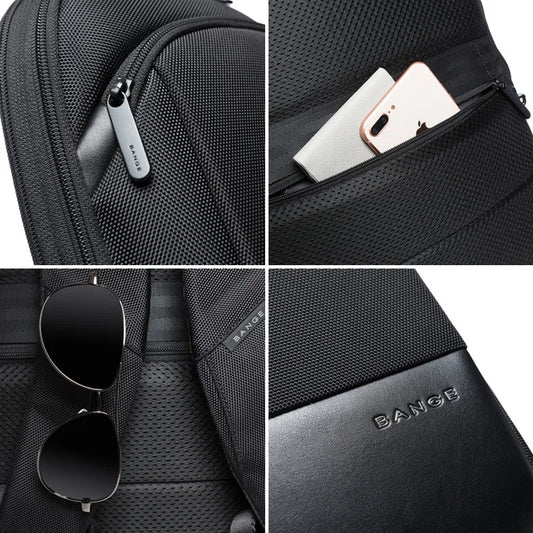
detail collage of black BANGE BG-77115 Ontra backpack showing zipper quality, quick-access pocket, breathable padding, and branded front panel
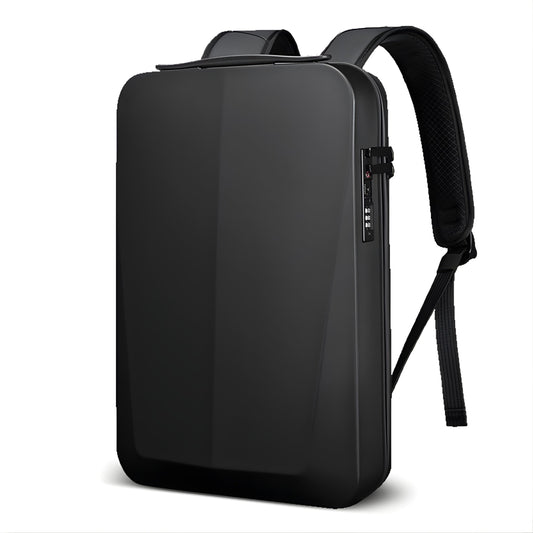
BANGE Leila: Hardshell Waterproof 24L Backpack with Anti-Theft feature
BANGE Leila: Hardshell Waterproof 24L Backpack with Anti-Theft feature — front view
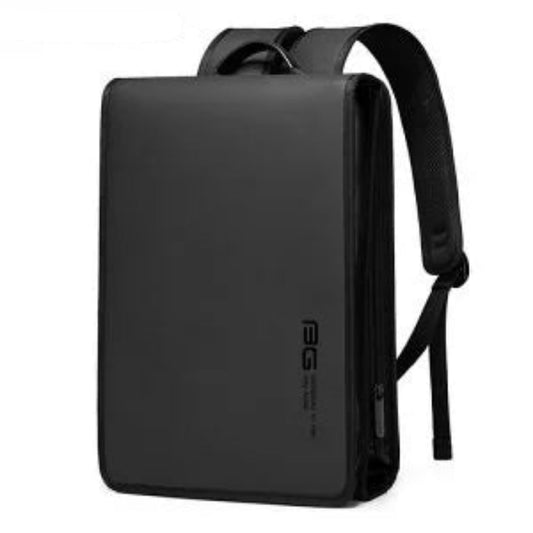
Side view of black BANGE BG-7252 slim backpack showing minimalist hard-shell design, padded shoulder straps, and vertical logo on a white background
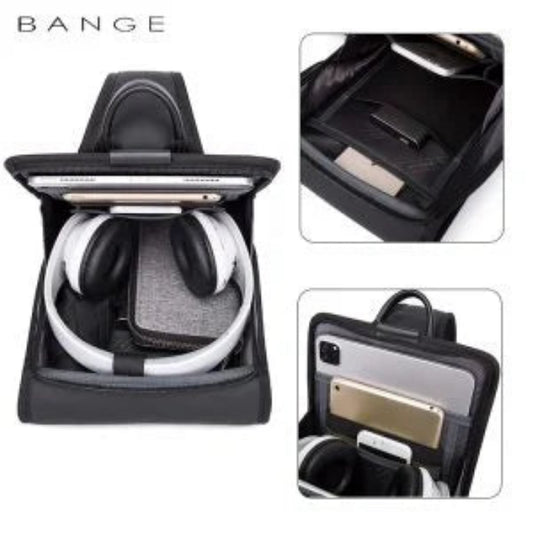
Interior view of black BANGE BG-7252 backpack showing organized compartments for laptop, tablet, phone, headphones, and accessories on a white background

A slim backpack solves a specific problem: you need to carry a laptop and a day's essentials without the bulk of a hiking pack strapped to your back on a crowded train. BANGE slim backpacks keep a low-profile silhouette while still holding a 14" to 15.6" laptop, a tablet, a charger and the small things you reach for all day, each in its own pocket rather than loose at the bottom.

How to choose a slim backpack

Depth is the number that matters. Most standard backpacks sit 15 to 20cm deep when loaded; a slim pack holds closer to 10 to 13cm, which is the difference between clearing a turnstile and catching on it. Look for a structured panel rather than a soft sack, because structure is what stops a thin bag from bulging into a lumpy shape the moment you put a lunch box in it.

Capacity follows from that. Slim packs generally land between 12 and 20 litres. That is enough for a laptop, a slim folder, a water bottle and a light jacket. If you regularly carry gym kit or a change of clothes, a slim profile will fight you, and an expandable model is the better call.

Materials and durability

Fabric choice decides how a slim bag ages. Water-resistant Oxford weave sheds rain and wipes clean, and higher-denier weaves such as ballistic nylon resist the abrasion that comes from setting a bag down on concrete and dragging it across desk edges. Check the zippers too: on a thin bag the zip carries more of the load, so smooth, heavy-gauge sliders and reinforced stitching at the stress points do more for lifespan than any single material claim.

Who a slim backpack suits

Commuters get the clearest benefit, because a narrow pack changes how you move through stations, lifts and open-plan offices. Frequent flyers use one as a personal item that slides under the seat without a fight. Students who carry a laptop rather than a stack of textbooks often prefer slim over standard, and anyone who cycles will notice that a close-fitting pack shifts less when you lean into a turn.

Wearing it comfortably

A slim bag distributes weight over a smaller area, so strap quality counts. Wide, contoured, padded straps spread the load across the shoulder rather than concentrating it on a narrow line. Pack the heaviest item flat against the back panel, not out toward the outer wall, which keeps the centre of gravity close to your spine and stops the bag pulling backward.

Related: see Laptop Backpacks for device protection, Business Backpacks for the office, and Lightweight Backpacks if minimum weight is the priority.

Frequently asked questions

How slim is a slim backpack? Roughly 10 to 13cm deep when loaded, against 15 to 20cm for a standard daypack.

Will a 15.6" laptop fit? Yes. Every model in this collection has a padded compartment sized for a 15.6" machine, and some take a 14" laptop with room for a tablet alongside.

Is a slim backpack good for travel? As a personal item, yes. It fits under an airline seat easily. For checked-bag-free trips longer than two nights, an expandable pack carries more.

Are they waterproof? They are water-resistant. The Oxford fabric sheds rain and spills, but treat sustained downpours with a cover.

Can I carry it on one shoulder? You can, and the narrow profile makes it comfortable for short distances, but two straps remain better for your back over a full commute.