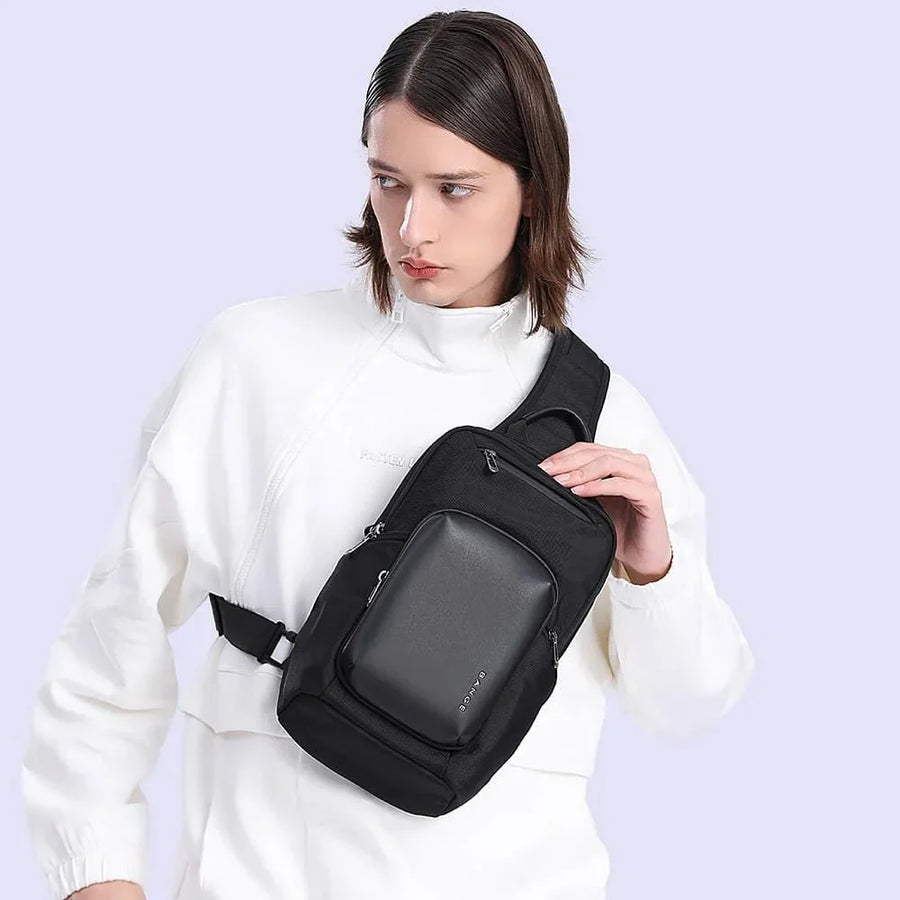
The "best" bag isn't a style, it's the one that matches how much you carry and how you move. A backpack, a sling and a messenger bag each solve a different problem, and using the wrong one is why your shoulder aches or your essentials are always buried.
Here's an honest, side-by-side breakdown so you buy the right shape the first time.
Quick answer: Carry a laptop and a full day's gear? Backpack. Light essentials and want them fast? Sling. Office documents you slide in and out all day? Messenger. Most people are happiest owning two.
The one question that decides it
Before comparing features, answer this: how much weight do you carry on a typical day, and for how long? Carrying capacity and comfort scale with the number of straps and how the load sits on your body. That single insight explains every trade-off below.
Backpack: best for bigger loads and comfort
Two straps spread weight across both shoulders and your back, which is why backpacks win for anything heavy or carried a long way. If you haul a laptop, charger, water bottle and a layer, or you walk a real distance in your commute, this is the comfortable, spine-friendly choice.

Pros: the most capacity, the best weight distribution, dedicated laptop protection. Cons: slower to access (you take it off or swing it around), and a bulky one can feel like overkill on a light day. As a comfort guide, keep a loaded daypack under about 10-15% of your body weight. For everyday work and study, a 20-30L pack like the Bange Strava 7267 hits the sweet spot.
Sling / crossbody: best for light, fast days
A sling rides on one shoulder across your body and swings to your front for instant access, no taking it off. It's the modern minimalist's pick: phones do more, so we carry less, and a sling is exactly enough for the essentials.
Pros: lightning-fast access, low-profile, stylish, great for travel and errands. Cons: limited capacity and one-shoulder load, so it's not for heavy hauls. Look for a comfortable adjustable strap and a hidden pocket; the Bange Swift 7566 fits a tablet plus daily essentials in a water-resistant build. Want the full picture on slings and chest bags specifically — what to look for, how to wear one, and which is which? See our complete sling and chest bag guide.
Messenger: best for a professional, flat profile
The messenger's flap-over, horizontal shape lets you slide a laptop and documents in and out in seconds, and it reads sharp in an office. The trade-off is that, like a sling, it carries on one shoulder, fine for a moderate load, tiring for a heavy one over long distances. Bange's messenger bag lineup covers this exact profile if a flap-over document bag fits your workday better than a backpack.

Pros: fast laptop/document access, professional look, easy to set on a desk and open. Cons: uneven weight on one shoulder, usually less total capacity than a backpack.
The quick decision guide
- Heavy load or laptop daily, longer commute? Backpack.
- Light essentials, on the move, want speed and style? Sling.
- Office documents and a laptop, frequent quick access? Messenger.
- Back/shoulder issues? Lean backpack for balanced weight.
Why most people end up with two
There's no rule that you pick one forever. A common, sensible setup is a backpack for workdays and travel, plus a sling for weekends, errands and "I just need my phone, wallet and keys" days. Matching the bag to the moment is more comfortable, and frankly more stylish, than forcing one bag to do everything.
Frequently asked questions
Are slings bad for your posture?
For light loads, no. Keep a sling's contents modest and switch shoulders occasionally; reserve heavier daily loads for a two-strap backpack.
Can a sling replace a backpack for work?
Only if your "work kit" is a tablet and essentials. If you carry a laptop, charger and more, a backpack is the comfortable choice.
Messenger or backpack for a laptop commute?
Messenger for speed and a professional look on shorter commutes; backpack for comfort if you carry more or travel farther.
The bottom line
Don't shop by style, shop by load and movement. Match the number of straps to the weight you carry and the speed you need, and the right bag becomes obvious. Explore our sling and crossbody bags to build a rotation that fits your life.
Previous
How to Pack a Carry-On Backpack for a Weekend Trip (Without Checking a Bag)
Next
How to Clean and Care for a Waterproof Backpack (Without Wrecking It)