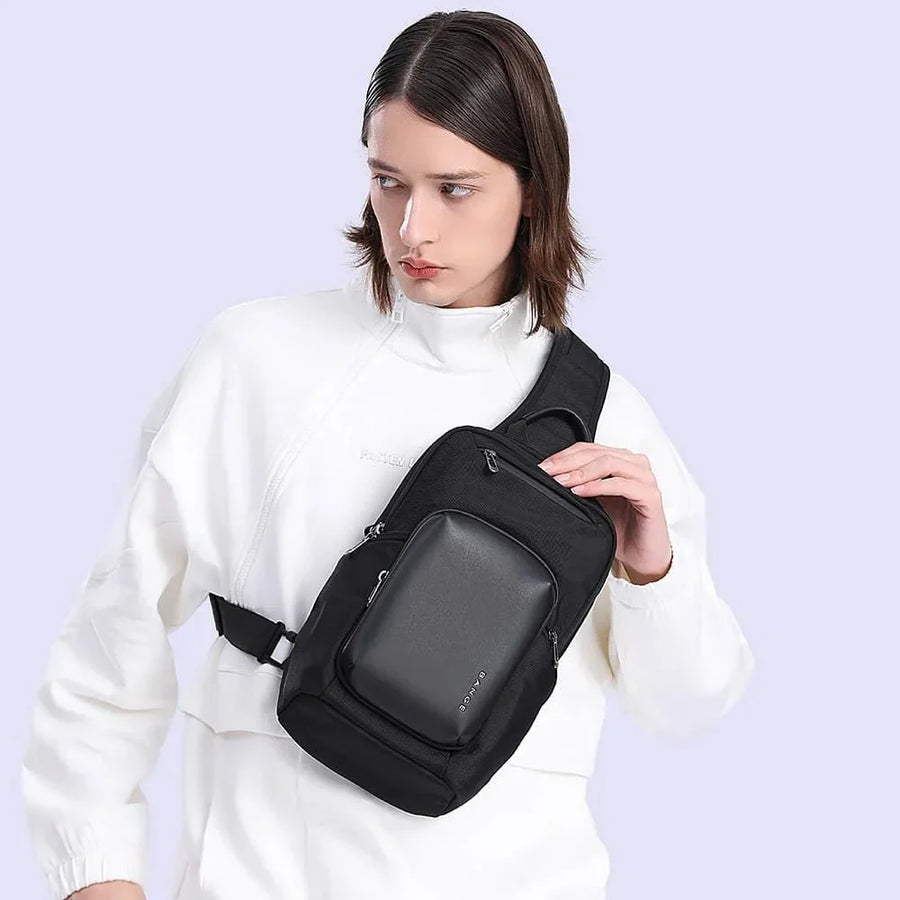
Short answer: for most daily commutes, the backpack that actually helps you is lighter than you think, has one pocket you can reach without taking it off, and doesn't advertise what's inside it. Below is what actually matters for commuting specifically (not hiking, not travel), four real BANGE backpacks compared on those points, and honest answers to the specific questions people keep asking us about commuter backpacks.
What actually matters for a commute (and what doesn't)
A commute is a specific, repeatable kind of stress on a bag: a few minutes of exposure to weather, a lot of time on your back or on a train floor, and, depending on where you live, a real reason to care about what's easy to grab off you in a crowd. That's a different set of priorities than a weekend hiking pack or a checked travel bag, so "best backpack" lists that mix all three tend to miss what commuters actually feel every day.
- Weight when empty. You carry the bag's own weight for the whole ride, not just what's in it. A 1.25 to 1.35 kg bag feels noticeably heavier by stop five than a 0.8 to 1.1 kg one, especially standing.
- One-hand, no-look access. The pocket you reach for on a moving train (transit card, phone, keys) should not be the same pocket as your laptop.
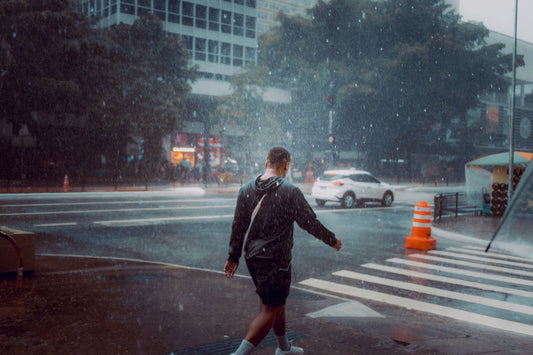
- Weatherproofing for minutes, not hours. Most commutes are a short walk in the rain, not a storm. A coated, water-resistant shell with decent zippers covers this; you don't need a submersion-rated dry bag for a train platform.
- Anti-theft only matters in specific conditions. If you ride crowded transit (a packed tube, metro, or bus) or move through open-pocket-picking environments, a concealed compartment or a lock is worth the small weight and cost. If you drive or walk to work alone, it's solving a problem you don't have.
Is a "D1000" backpack easier to carry for commuting?
We get this question a lot, so a direct answer: BANGE doesn't make a model called the D1000, and "D1000" isn't a standard industry term. You may be thinking of denier, the number used to rate fabric thickness (the "D" in 1680D, 900D, and so on). Denier measures abrasion resistance, not how easy a bag is to carry. A higher-denier fabric like the 1680D polyester on the Solix 1801 is more tear- and scratch-resistant, but the bag still weighs 1.06 kg either way. Carry comfort comes from the bag's actual weight, its back panel and strap padding, and how well its load sits against your back, not from the fabric's denier rating.
What matters most for commuting on crowded transit (the tube, the metro, a packed bus)
If your commute involves standing in a crowd, this is the question we hear most from city commuters, three things matter more than anything else on a spec sheet:
- A pocket you can reach without opening the main compartment. The Aerox 2517 has a built-in card slot and glasses hook on the strap itself, so your transit card doesn't require unzipping anything.
- Something between your valuables and a crowd. A concealed rear panel pocket (Solix 1801) sits against your back, out of reach in a crowd by design. A combination lock on the main zipper (Avion 7216) adds a physical barrier, not just a hidden spot.
- A profile that doesn't swing. Anti-theft only helps if the bag also fits close to your body. An oversized, loosely packed bag is easier to bump and easier to work into, crowd or no crowd.
Four BANGE commuter backpacks, compared honestly
| Backpack | Weight | Laptop fit | Anti-theft | Price |
|---|---|---|---|---|
| Daily Commuter 25L | 0.8 kg, lightest here | Padded compartment, 25L total | None, simplest option | $68.99 |
| Solix 1801 | 1.06 kg | 15.6 to 16" + 12.9" iPad | Concealed rear pocket | $74.99 |
| Avion 7216 | 1.25 kg | 15.6" + 11" tablet | Built-in zinc-alloy TSA lock, strongest here | $69.99 |
| Aerox 2517 | 1.35 kg, heaviest here | Up to 17", TSA 180° flat-open | None, but reach-without-opening card slot | $74.99 |
So which one: three straight recommendations
- Quiet commute, no security concerns: the Daily Commuter 25L. It's the lightest bag here by 250+ grams and does exactly one job: get your laptop there dry, without paying for features you won't use.
- Crowded transit, security is the actual concern: the Avion 7216. A physical combination lock beats a concealed pocket if someone's determined, and at 1.25 kg it's lighter than the Aerox while still fitting a 15.6" laptop.
- You also fly for work and want one bag for both: the Aerox 2517. The TSA 180° laptop sleeve that lays flat at security is the one feature here that's genuinely wasted on a pure commute. It earns its extra 300g if you're also in airports regularly.
Frequently asked questions
Do I actually need an anti-theft backpack for commuting?
Only if your commute involves crowds where someone could work at a pocket unnoticed, a packed subway car or bus, not a quiet walk or a car commute. If that's your situation, a concealed pocket helps against opportunistic theft; a physical lock like the Avion 7216's helps more.
What's the lightest BANGE backpack for daily commuting?
The Daily Commuter 25L at 0.8 kg. Every added feature (a lock, a TSA-flat laptop sleeve, extra capacity) adds weight, so the right choice depends on whether you'll actually use that feature.
Is a heavier backpack more durable?
Not necessarily. Weight mostly comes from padding, hardware, and capacity, not fabric toughness. The 1680D polyester on the Solix 1801 is more abrasion-resistant than a lighter fabric at a similar weight to the other options here, so durability and weight aren't directly traded off against each other the way people assume.
Will any of these survive a rainy commute?
Yes, all four use water-resistant or waterproof shells (coated Oxford or 1680D polyester) suitable for a walk in the rain. None are built for sustained submersion; see our waterproof vs. water-resistant guide if you need more than commute-level weather protection.
Every BANGE bag: free shipping over $49.99, 1-year warranty, 30-day returns.