The Ultimate Backpack Buying Guide for Every Lifestyle – by Bange
Choosing the right backpack isn't just about appearance—it’s about matching design with purpose. Whether you’re commuting to work, traveling the world, or simply running daily errands, Bange offers purpose-built backpacks tailored to your lifestyle. In this expert guide, discover how to select the best backpack for your needs and why thousands trust Bange for reliable, stylish, and functional carry solutions.
Black Friday through Green Monday: when to buy and when to order by
Timing this around the holiday sales calendar? Use code HOLIDAY10 for 10% off any Bange backpack from Black Friday through Green Monday this year (Nov 27–Dec 14, 2026, sitewide, one code for the whole stretch).
The dates matter more than they look for a backpack specifically. If it's going under a tree, Black Friday and Cyber Monday week is the safer window to order — shipping typically runs 5-9 business days, so ordering early in that stretch leaves real room for a holiday delivery. The discount is the same all the way through Green Monday, but waiting that long leaves less runway if shipping takes the long end of that window.
How Much Capacity Do You Actually Need? A Backpack Size Guide
Before you fall in love with a color or a silhouette, get the size right. Backpack capacity is measured in liters, and picking the wrong range is the single most common buying mistake: either you end up hauling a half-empty bag or fighting to zip an overstuffed one. Here's a realistic breakdown by lifestyle:
✅ 15-25L, Everyday Carry: A water bottle, a light jacket, a tablet, keys and wallet. This is the sweet spot for students without heavy textbooks and anyone who wants a bag that doesn't dominate their outfit.
✅ 20-35L, Laptop & Commute: Room for a 15-16" laptop, charger, lunch, and a change of shoes, without the bulk that makes a packed subway car miserable.
✅ 30-45L, Travel & Carry-On: Most airlines cap carry-on dimensions around 45 linear inches (115 cm), so a bag in this range is built to ride in the overhead bin instead of getting checked. It's enough for a long weekend without checking a bag.
✅ 40L+, Weekend & Outdoor: Extra layers, a change of shoes, camera gear, or overnight essentials. Past this size, look for compression straps so the bag doesn't sag when it's not full.
A good rule of thumb: pick the smallest capacity that fits your heaviest regular load. A backpack that's always full sits closer to your back, distributes weight better, and simply lasts longer than one that's constantly overstuffed or half-empty.
Laptop Backpacks: Professional Protection On-the-Go
In today’s hybrid work era, a laptop backpack is more than a bag—it’s a daily essential. Bange laptop backpacks combine modern aesthetics with secure functionality. Featuring padded laptop compartments, anti-theft zippers, USB charging ports, and water-resistant exteriors, they’re built to protect your tech and elevate your everyday look.
Standouts include the Aerox 2517 travel backpack and the expandable backpack for one-bag travel.
Ideal for professionals, freelancers, and students alike, Bange laptop bags offer structured interiors to keep gear organized and ergonomic designs that ensure comfort through long commutes.
Travel Backpacks: Built for Modern Exploration
Your travel gear should make every journey smoother—not harder. Bange travel backpacks are engineered for maximum efficiency: lightweight yet durable, with spacious compartments, compression straps, and breathable back padding.
Perfect as carry-ons or daypacks, our travel backpacks come with smart compartments, secure pockets, and sleek silhouettes designed for mobility, speed, and style. Whether it’s a weekend city escape or a cross-continental flight, Bange keeps you moving forward.
Casual Backpacks: Minimalist Style for Everyday Life
When functionality meets urban design, you get Bange’s casual backpack line. These bags are ideal for everyday use—stylish, versatile, and lightweight. Whether you're carrying books, gym gear, or daily essentials, these backpacks adapt seamlessly to your lifestyle.
Minimalist yet impactful, our casual designs are perfect for those who prioritize simplicity without compromising on quality or comfort.
Sling Bags & Tech Cases: Compact Utility, Big Performance
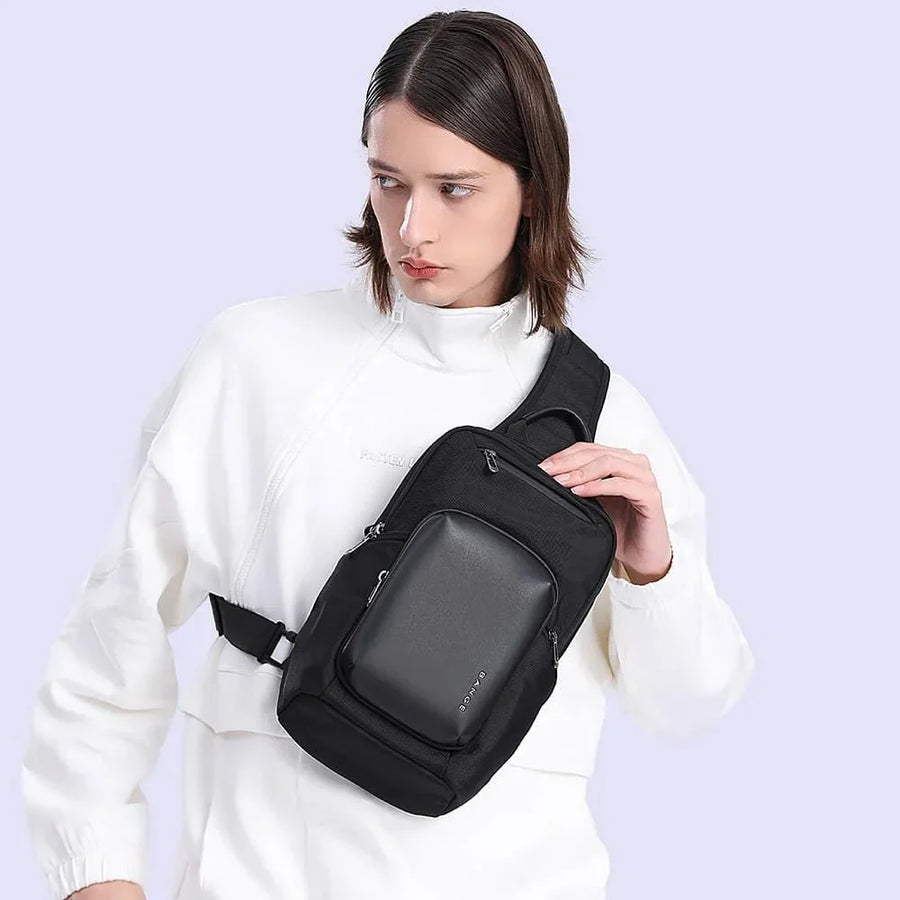
Need quick access and maximum mobility? Bange’s sling bags and compact cases are your answer. Designed for active lifestyles, our one-strap designs are ideal for urban exploring, biking, or travel. Perfect for essentials like your phone, wallet, passport, and keys, these bags are lightweight, secure, and sleek.
Combine them with our weather-resistant tech cases for ultimate modular storage and protection.
Fit Is Everything: How to Actually Try On a Backpack
Capacity gets you in the right category, but fit is what makes a backpack comfortable for eight hours instead of eighty minutes. A few things worth checking before you buy, in-store or against the size chart online:
✓ Load it before you judge it. An empty backpack tells you nothing. Add roughly 10 lbs (about 4-5 kg) of books or gear and walk around for a few minutes. Straps that felt fine empty can dig in once there's real weight on them.
✓ Check the shoulder straps. They should sit flat against your shoulders with no gap or twisting, and the sternum strap (the small clip across your chest) should close without pulling the shoulder straps inward.
✓ Look for load lifter straps. On larger daypacks and travel backpacks, these small straps run from the top of the shoulder strap back to the pack itself. Cinching them pulls the load in closer to your body instead of letting it sag backward, most useful once a bag is carrying more than about 15 lbs.
✓ Feel the back panel. A padded, slightly channeled or mesh back panel keeps air moving so your shirt isn't soaked after a ten-minute walk. This matters more for commuting and travel bags than it seems, since they're worn for longer stretches than a typical gym bag.
If a backpack passes all four checks loaded, it will almost certainly still feel good after a full day of actual use.
Decoding the Spec Sheet: Denier, Water Resistance & Zippers
Backpack listings throw around numbers and terms that sound technical but are simple once explained. Here's what they actually mean:
Denier (D): This measures the thickness of the fabric yarn, not the finished bag's weight. A 300D fabric is lighter and more flexible; a 600D to 900D fabric (common in commuter and travel backpacks) balances weight with real abrasion resistance; 1200D and up shows up mostly on rugged, load-hauling gear. Higher denier generally means a fabric that resists scuffs and tears longer, at the cost of a bit more weight.
Water-resistant vs. waterproof: These are not the same claim. Water-resistant fabric and coatings (like a DWR, or durable water repellent, finish) cause rain to bead and roll off, which covers everyday drizzle and splashes. Waterproof means the material and seams are sealed to block water entirely, which most everyday and travel backpacks don't need and don't claim.
Zipper quality: Not all zippers are equal. Branded coil zippers (YKK is the industry benchmark) resist snagging and hold up to thousands of open-close cycles, which matters far more than it seems on a bag you'll use daily for years. Anti-theft zippers add a second layer, either hidden pull tabs or lockable sliders, that make it harder for someone to open your bag in a crowd without you noticing.
Knowing these terms means you can compare two similar-looking backpacks and actually understand why one costs more than the other.
Why Choose Bange?
At Bange, we don’t just design bags—we build tools that support your life. Every stitch, zipper, and compartment is created with intention, built to simplify your journey and elevate your experience.
Frequently asked questions
What backpack size should I buy if I'm not sure how I'll use it?
Go with the 20-35L range. It covers a laptop and commute essentials comfortably, and it's forgiving enough for the occasional weekend trip without feeling oversized day to day.
What's the actual difference between water-resistant and waterproof backpacks?
Water-resistant fabric and coatings shed rain and splashes but aren't sealed against sustained exposure. Waterproof means the material and seams are fully sealed against water — a spec most everyday and travel backpacks don't need or claim.
Does a higher denier number always mean a better backpack?
Not necessarily. Higher denier (fabric thickness) means more abrasion resistance but also more weight. 600D-900D is the common sweet spot for commuter and travel bags; very high denier fabric is really built for rugged, load-hauling use rather than everyday carry.
How do I know if a backpack actually fits before I buy it?
Load it with roughly 10 lbs of books or gear and wear it for a few minutes rather than judging it empty. Check that the shoulder straps sit flat with no twisting, the sternum strap closes without pulling the straps inward, and the back panel has some padding or mesh channeling for airflow.
Are YKK zippers actually worth looking for?
Yes — branded coil zippers like YKK resist snagging and hold up to far more open-close cycles than generic zippers, which matters most on a bag you're opening multiple times a day for years.
Find your perfect bag with Bange—where innovation meets everyday utility.
Previous
5 Reasons Every Professional Needs a Bange Laptop Backpack
Next
5 Reasons Every Professional Needs a Bange Laptop Backpack