"Waterproof" and "water-resistant" get slapped on product pages interchangeably—but they don't mean the same thing, and the fabric underneath matters just as much as the label. If you've ever opened your bag to a damp laptop, this guide is for you.
Quick answer: For everyday city use, water-resistant Oxford or polyester is plenty. If you're regularly caught in heavy rain, choose a fully waterproof build with coated fabric and water-repellent (YKK) zippers—or a roll-top.
Water-resistant vs waterproof: the real difference
Water-resistant means the fabric shrugs off light rain and splashes for a while—enough for a dash to the train. Waterproof goes further: a coated fabric, water-repellent zippers and sometimes sealed seams keep water out in sustained or heavy rain. Note that very few everyday backpacks are truly submersible; think of "waterproof" here as "highly weather-resistant for real-world rain."
The weak point is almost always the zippers and seams—not the fabric. That's why a bag can have a waterproof shell yet still leak if its zippers aren't treated.
The fabrics, decoded

- Polyester — lightweight, affordable, quick-drying and naturally water-resistant. A great all-rounder for daily bags.
- Oxford — not a separate fiber but a tough basket-weave (usually of polyester or nylon) prized for abrasion and water resistance. You'll see it as "600D Oxford" or "1680D Oxford."
- Nylon — stronger and more abrasion-resistant than basic polyester, with a premium hand-feel; common in higher-end bags.
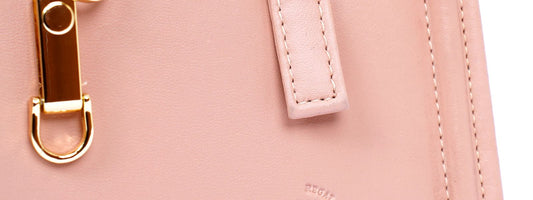
- Leather — looks the part and is naturally tough, but needs treatment to handle rain and adds weight.
What the "D" number actually means
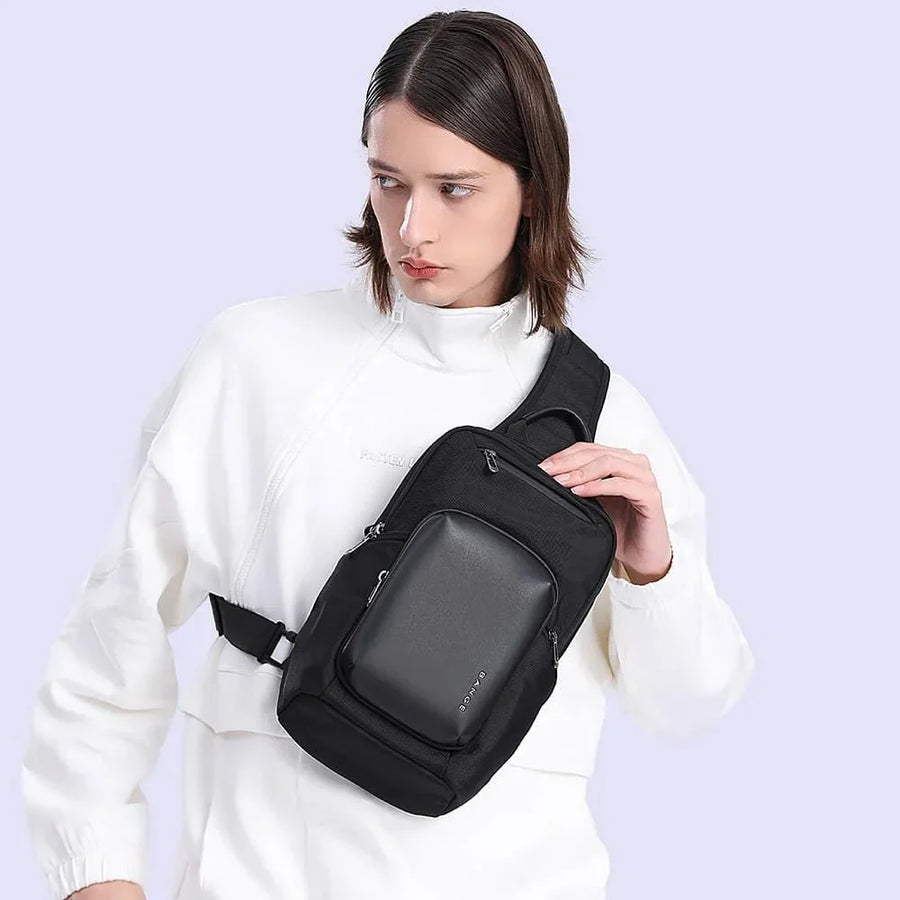
That D stands for denier—a measure of yarn thickness. Higher denier means thicker, tougher yarn and a more durable, more water-resistant shell. In practice, a 1680D fabric is dramatically more rugged than a 600D one and resists scuffs, snags and weather far better. If a bag will see daily abuse or travel, lean toward higher denier. Bange's Solix 1801, for instance, uses a military-grade 1680D shell built to shrug off both knocks and rain.
Coatings, zippers and seams
Three things turn "water-resistant fabric" into a genuinely dry bag:
- A coating (PU or PVC backing) that stops water passing through the weave.
- Water-repellent zippers—YKK is the industry gold standard—or a storm flap covering standard zippers.
- A roll-top design, which removes the vulnerable top zipper entirely and rolls the opening closed.
A roll-top like the Bange Flexon 7700 in coated Oxford is a smart pick if weather protection is your priority.
How to choose for your climate
Mild or mostly dry? Water-resistant polyester or Oxford covers you. Frequent rain or a long outdoor walk in your commute? Step up to fully waterproof: coated fabric, YKK or covered zippers, ideally a roll-top. Carrying expensive electronics daily? Don't gamble—buy the higher protection tier.
Keep it performing
Waterproof coatings degrade if you machine wash or tumble dry a bag. Hand wash, air dry, and brush grit out of zippers so they keep sealing. (We cover this fully in our backpack care guide.)
Frequently asked questions
Is Oxford fabric waterproof?
Oxford is water-resistant by weave and becomes effectively waterproof when coated and paired with sealed or covered zippers. Uncoated Oxford resists light rain only.
Does higher denier mean waterproof?
Not by itself—denier measures durability and weave tightness. Waterproofing comes from coatings, zippers and seams. High denier plus a coating is the strong combination.
Are roll-top backpacks more waterproof?
Generally yes, because they eliminate the top zipper—the most common leak point—and roll the opening shut.
The bottom line
Read past the buzzwords: match the protection tier to your climate, check the denier for durability, and confirm the zippers (or a roll-top) before you trust a "waterproof" claim. Explore Bange's waterproof and water-resistant backpacks to find the right shell for your weather.